Basking vs Occuspace: Two WiFi-First Occupancy Platforms, Compared


Most comparisons on this site pit two very different approaches against each other. This would be simple, but this one’s different: Basking and Occuspace seem close.
Both offer a privacy-first, camera-free approach to occupancy analytics, and both can start from a building’s existing WiFi infrastructure without requiring a new sensor rollout. If you’re comparing them, you won’t find one that “measures” and one that doesn’t.
So the real question is what each platform is built to do with that data once it has it.
That’s where they separate.

Keep reading for the full breakdown
Or skip ahead and explore the platform on your own portfolio.
If you’re reading this, you’re probably mid-evaluation. Occupancy data on the table, a real estate or workplace decision behind it, and two vendors that look almost identical on the surface. So, before the differences, a quick, honest picture of what each company actually is. Then we’ll get into where they diverge and which one fits the decision you’re trying to make.
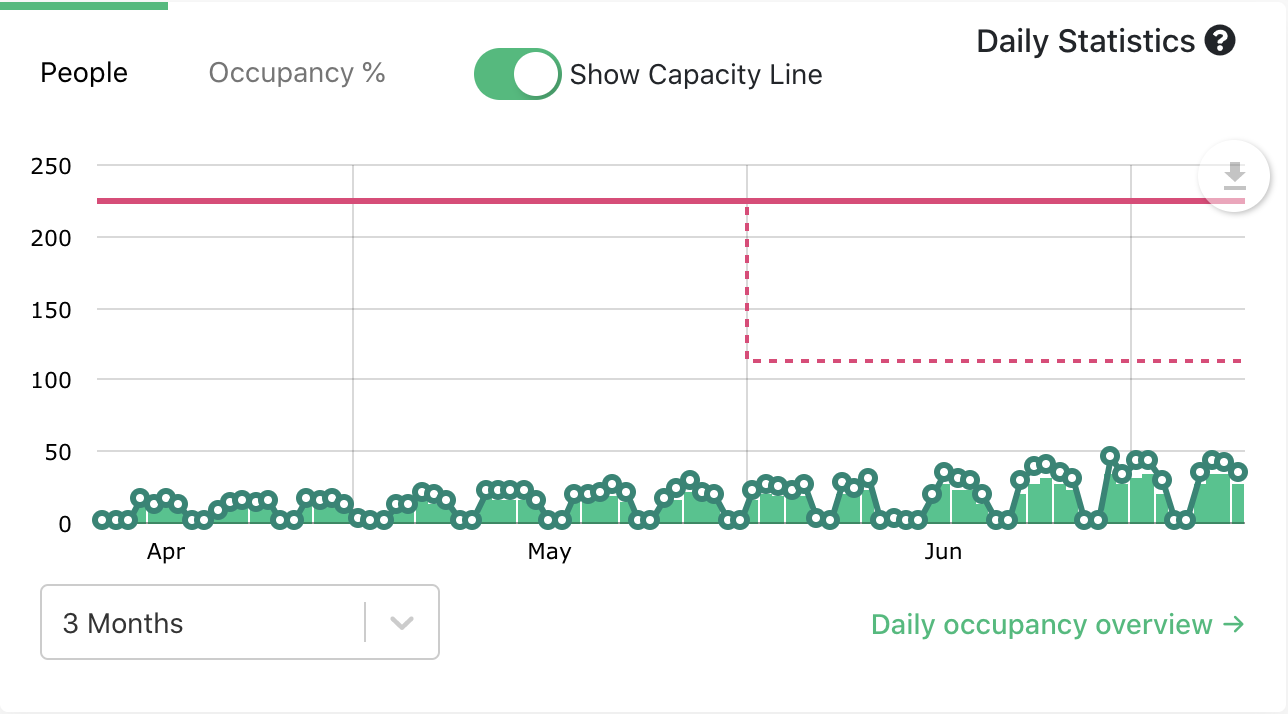
Occuspace is an occupancy intelligence platform. Its center of gravity is measuring space use and applying that data to building operations, energy optimization, planning, and portfolio utilization.
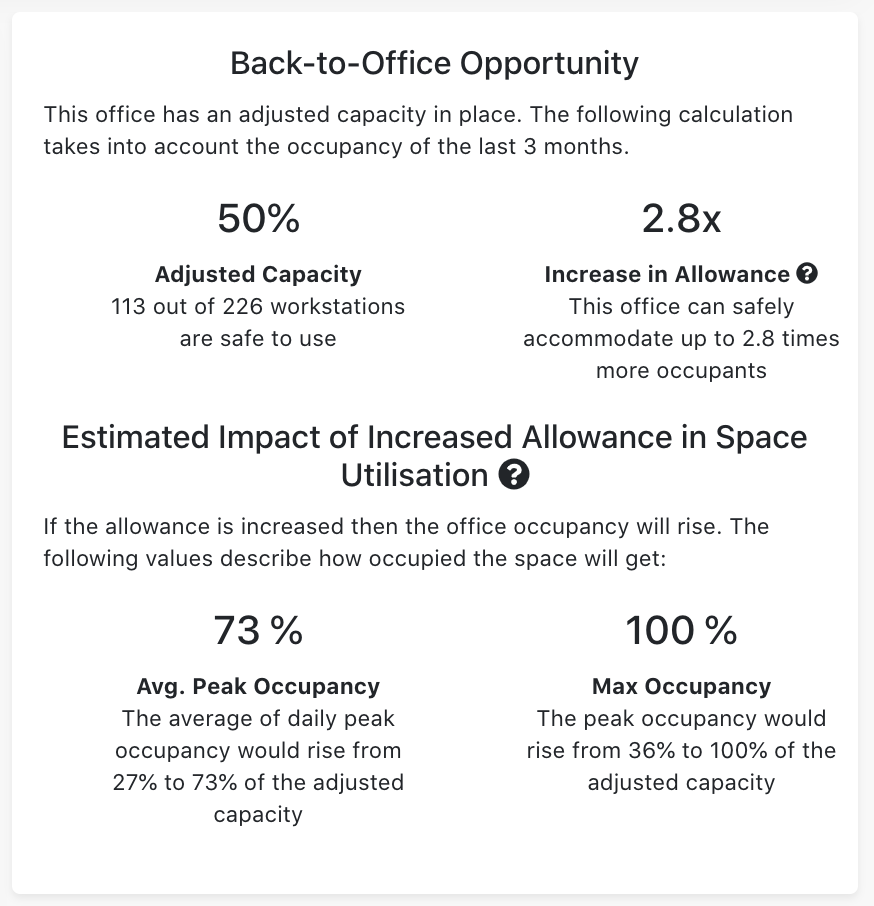
Basking also measures occupancy, but it carries that signal further into real estate decisions by connecting utilization with lease administration, costs, and portfolio workflows. The distinction is not whether both can measure space use; it is how directly that measurement connects to the lease and the decision that follows.
For teams focused primarily on building operations and energy optimization, Occuspace offers a focused occupancy-intelligence toolkit. For corporate real estate teams facing renewals, consolidations, and portfolio cost decisions, Basking connects the occupancy signal directly to the contractual and financial side of the portfolio.
Where they genuinely overlap
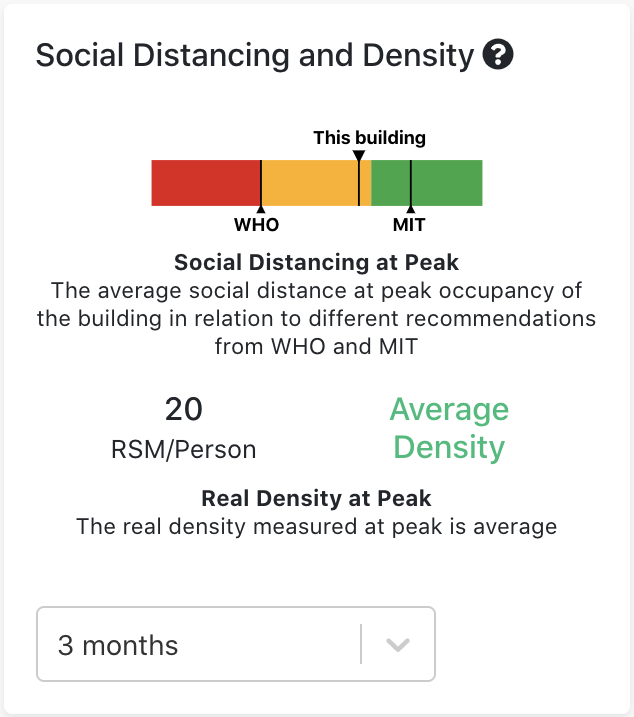
Both platforms offer privacy-first occupancy measurement without cameras or personally identifiable information. Both can use existing WiFi infrastructure as a hardware-free starting point, enabling low-disruption deployment across an existing portfolio. From there, their broader sensing options and decision workflows differ.
On the core question of “can this platform tell me how full my building is, privately, without a big install” — both answer yes.
If occupancy measurement is the only requirement, the evaluation comes down to deployment fit, coverage, reporting, support, and how each platform handles the data after collection.
Basking vs Occuspace
| Basking | Occuspace | |
|---|---|---|
| Core approach | Occupancy analytics connected to lease, cost, and portfolio decisions | Occupancy intelligence for space use, building operations, and utilization planning |
| Sensing | Anonymized WiFi signals with badge and sensor inputs supported | Existing WiFi plus optional Macro (BLE/WiFi) and Micro (mmWave) sensors |
| Hardware-free option | Yes — runs on existing WiFi infrastructure | Yes — existing WiFi access points can be used for occupancy measurement |
| Additional data sources | Can incorporate badge and dedicated sensor data alongside WiFi | Offers its own Macro and Micro sensors for greater granularity |
| Privacy & security | No PII, anonymized, SOC 2 Type II / ISO 27001 | No PII, anonymized, SOC 2 Type II / ISO 27001 |
| Accuracy reporting | Site-level calibration with defined metrics including MAE and capacity-normalized accuracy | Publishes headline accuracy figures and documents a manual-count calibration workflow |
| Primary focus | CRE portfolios, lease economics, cost, and portfolio decisions | Occupancy intelligence, building operations, and energy optimization |
| Lease intelligence | Yes — LeaseOps, AI abstraction, lease events, and approvals | Not positioned as a lease administration platform |
| Strong in | Corporate real estate, distributed portfolios, renewals, consolidations, and right-sizing | Building operations, energy optimization, workplace and campus utilization |
| Best when the question is | “What should we do with this lease, cost, or space?” | “How is this space being used, and how can operations respond?” |
Where they diverge is what happens after measurement
The difference shows up the moment occupancy data needs to become a decision.
Occuspace focuses on occupancy intelligence and the operational decisions that follow from it. Its platform supports use cases including energy optimization, right-sizing, workplace and campus planning, and building-system integrations, with a mix of WiFi-based coverage and its own Macro and Micro sensors where greater granularity is needed. It also provides an AI interface for querying occupancy data.
Basking starts from the same occupancy signal but is built to carry it into real estate decisions. Utilization connects to LeaseOps so a floor’s usage sits next to its lease — rent, renewal options, notice dates, cost exposure. DocsAI turns lease PDFs into structured data with a human-in-the-loop review step, and decisions route through approvals with IFRS 16 reporting in the same place. So an underused floor doesn’t just trigger a space-optimization idea — it becomes a renewal, sublease, or consolidation decision the CRE and finance teams can act on together.
That is the key distinction: Occuspace turns occupancy data into operational intelligence, while Basking connects occupancy directly with lease, cost, and portfolio decision workflows.
Same signal. Different depth.
Occupancy measurement is only the starting point.
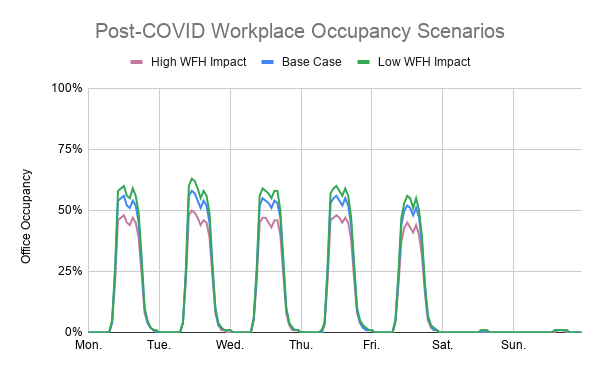
Both platforms can begin with occupancy data from existing WiFi. The bigger difference is how far that signal travels into the real estate decision.
Occupancy intelligence applied to:
Basking starts with occupancy too — then connects it to the information and workflows behind portfolio decisions.
How each platform talks about accuracy
Accuracy deserves a closer look because a headline percentage does not tell you how that number was produced.
Occuspace publicly reports people-counting accuracy in the mid-to-high range and documents a calibration process that uses manual head counts to improve its occupancy models. What is less explicit in its public materials is how the advertised percentage itself is calculated — for example, which error metric or tolerance sits behind the number.
Basking reports accuracy differently. Sites can be calibrated against badge, sensor, or manual-count data, with performance documented through defined metrics such as Mean Absolute Error and capacity-normalized accuracy. That makes it possible to evaluate not only an advertised accuracy number, but how accuracy was measured for a specific deployment.
Where each is the better fit
Occuspace is a strong fit for facilities and operations teams whose primary goals are occupancy-driven building operations, energy optimization, and day-to-day utilization intelligence.
Basking is the stronger fit for corporate real estate and workplace teams whose decisions run through leases and portfolio economics: renewals, consolidations, right-sizing, cost reporting, and who want occupancy data and lease data living in one system rather than two.
The important distinction is how far the occupancy signal needs to travel. For enterprise CRE teams making lease, cost, consolidation, and portfolio decisions, Basking carries occupancy into a broader decision workflow. For teams primarily focused on occupancy-driven building operations and energy optimization, Occuspace offers a more specialized operational layer.
FAQ
Are Basking and Occuspace basically the same?
No. They overlap in occupancy measurement and both offer a privacy-first, hardware-free WiFi path, but they are built around different decision workflows. Basking connects occupancy directly to lease administration, costs, and portfolio decisions. Occuspace focuses on occupancy intelligence for building operations, energy optimization, and utilization planning.
Do both work without installing hardware?
Yes. Both can turn a building’s existing WiFi access points into occupancy sensors, so an existing portfolio can come online quickly without a sensor rollout. Occuspace also offers its own Macro and Micro sensors for greater granularity, while Basking can incorporate dedicated sensor and badge data alongside WiFi.
Which is better for privacy-sensitive environments?
Both are privacy-first by design: anonymized signals, no cameras, no personally identifiable information. Basking is additionally SOC 2 Type II and ISO 27001 certified and meets GDPR, CCPA, and similar regulations. For most privacy reviews, either approach clears more easily than camera-based sensing.
Which one connects occupancy to lease decisions?
Basking. It’s built to join occupancy data with lease administration through LeaseOps, so renewals, consolidations, and cost decisions reflect actual usage. Occuspace focuses on occupancy intelligence and doesn’t position lease administration as part of its platform.
Which should an enterprise CRE team choose?
If the primary priority is occupancy-driven building operations and energy optimization, Occuspace is a strong fit. If the priority is turning occupancy into lease, cost, consolidation, and portfolio decisions in one system, Basking goes further.
From occupancy to action
See what happens when occupancy and lease data live in one platform.
Bring your own portfolio and see how Basking connects utilization to leases, costs, renewals, consolidations, and the decisions that follow.
Book a walkthrough →